
Animal testing for household products
Household products such as cleaning products and laundry detergents contain chemicals. Under the EU’s REACH chemicals regulation, animal testing is used to assess the safety of these substances. As a result, more than one million animals are killed every year in Switzerland and across Europe. However, there are also household products that are not tested on animals.
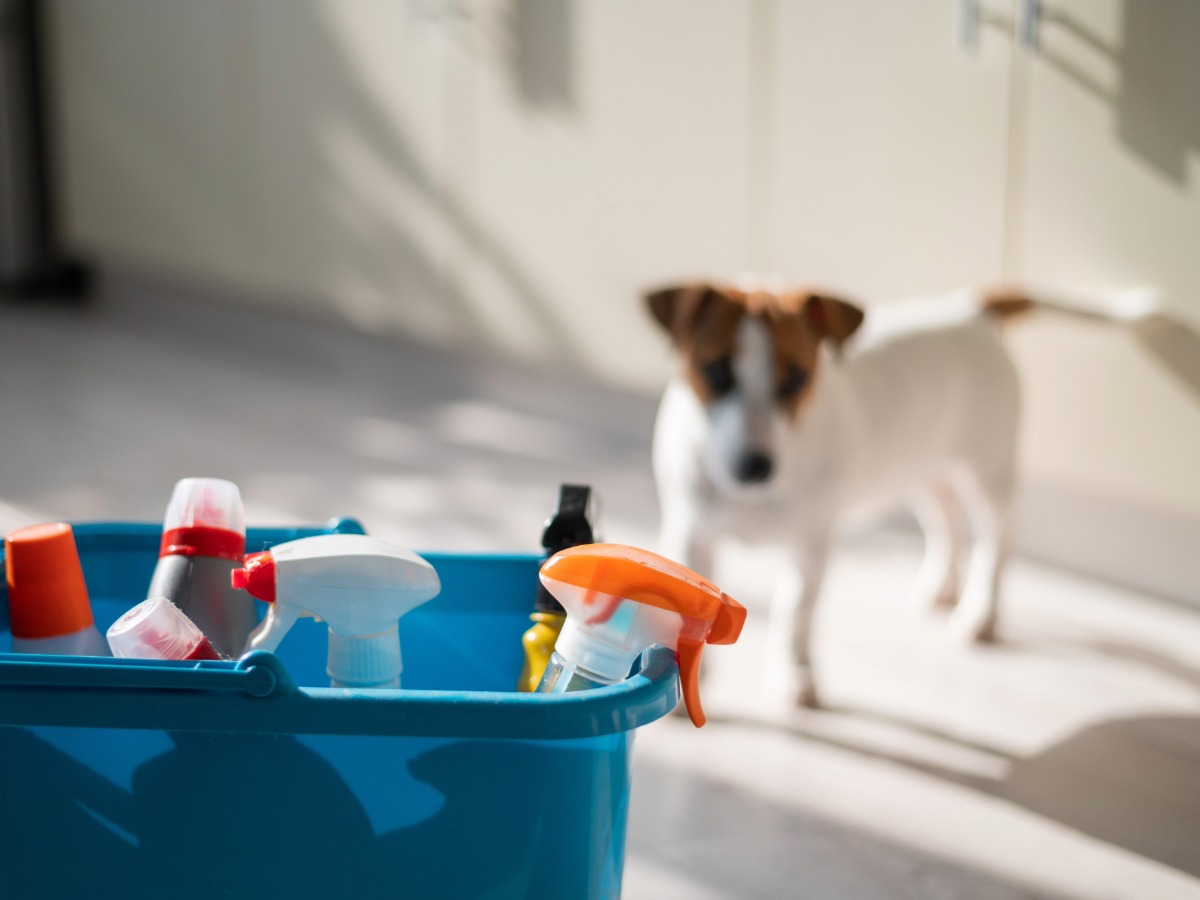
Why and how are household products tested on animals?
In Switzerland, the placing on the market and the preparation of ingredients for household products are regulated by the Chemicals Ordinance (ChemV). As in many other areas, Swiss standards largely align with those of the EU. Since 2007, the EU has had the so-called REACH Regulation (Registration, Evaluation, Authorisation and Restriction of Chemicals), which aims to systematically assess the risks that chemical substances pose to human health and the environment across the European Union.
However, this regulation, which is fundamentally important, also has a darker side: although animal testing is legally required to be used only as a last resort, when all other accepted methods fail to provide sufficient data, a total of 4.2 million animals had been subjected to experiments for the safety assessment of chemicals between the regulation’s introduction and 2022. Estimates suggest that a further 3.5 to 6.9 million animals may have been used in tests and lost their lives following the revision of REACH in 2022.
Common animal tests carried out under the EU’s REACH chemicals regulation to assess the safety of chemical substances include:
Skin and eye irritation tests
Chemicals are applied directly to the eyes of test animals, rubbed onto shaved skin or injected under the skin to assess whether substances cause allergic reactions or corrosive effects.
Toxicity tests
Solid substances are administered to test animals using a feeding tube, while gaseous substances are administered through the respiratory tract. The aim is to determine acute toxicity or the lethal dose, or to identify long-term effects following repeated exposure.
Reproductive toxicity tests
These tests examine how chemical substances affect the reproductive capacity of sexually mature animals, as well as their effects on offspring. Pregnant test animals are administered substances using a feeding tube. Shortly before giving birth, the mothers are killed and their embryos examined for malformations.
Genotoxicity tests
Test animals are given substances orally or injected into the abdominal cavity to investigate their effects on DNA.
Carcinogenicity tests
Test substances are administered orally or applied to the skin of test animals. These tests can last for several years. After the animals are killed, their organs are examined for cancerous changes.
Petition to end animal testing for household products
In the European Union, animal testing for household products and their ingredients will be banned as of mid-2029. This decision was made by the European Parliament in January 2026. The United Kingdom also has a roadmap for phasing out animal testing for skin and eye irritation. Switzerland, however, is lagging behind. So far, there have been no government or regulatory decisions in Switzerland aimed at systematically and consistently replacing animal testing.
We want to change that. In June 2026, Animalfree Research launched a petition to the Swiss Parliament. It calls for a comprehensive ban on animal testing for household products and their ingredients in Switzerland, as well as a ban on the sale in Switzerland of household products and their ingredients that have been tested on animals.
The household guide: clean without cruelty
Until Switzerland introduces a comprehensive ban on animal testing for household products, consumers need to stay vigilant when shopping! Unlike cosmetic products, laundry detergents and cleaning products are not consistently labelled with certification logos.
With this guide (in German), we aim to help you navigate the options and find cruelty-free cleaning products and laundry detergents.
Order guide
We will send you the cosmetics guide by post
„*“ zeigt erforderliche Felder an
